
Merchant cash advances (MCAs) were originally marketed as fast and flexible funding solutions designed to help businesses access working capital without the delays associated with traditional bank financing. For many companies facing short-term cash flow challenges, the promise of rapid approvals and immediate funding appeared attractive.
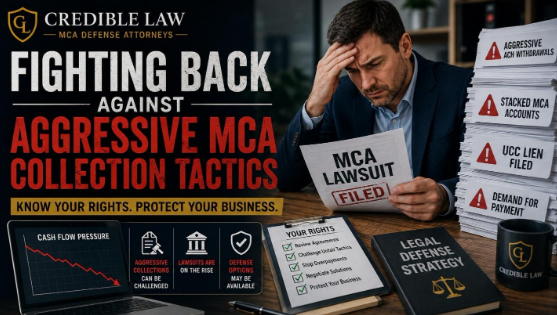
However, as the MCA industry has expanded nationwide, a growing number of business owners are reporting serious concerns involving:
-
aggressive collections,
-
escalating ACH withdrawals,
-
stacked funding positions,
-
UCC liens,
-
financing denials,
-
lawsuits,
-
and operational disruption.
Across multiple industries, businesses are increasingly pushing back against collection tactics they believe have become financially unsustainable or legally questionable.
For many owners, what began as an effort to stabilize operations eventually evolved into a cycle of mounting debt pressure and increasing legal exposure.
The Rapid Growth of MCA Funding
Merchant cash advances became popular because they addressed a major problem facing small businesses: access to capital.
Traditional banks often impose:
-
strict underwriting standards,
-
lengthy approval timelines,
-
high documentation requirements,
-
and rigid credit criteria.
MCA companies positioned themselves as an alternative by offering:
-
faster approvals,
-
minimal paperwork,
-
and funding decisions based heavily on business revenue rather than traditional lending metrics.
Businesses in industries such as:
-
trucking,
-
eCommerce,
-
hospitality,
-
retail,
-
construction,
-
and professional services
frequently turned to MCAs during periods of rapid growth or temporary cash flow instability.
But the convenience of fast funding often came with substantial long-term risks.
How Collection Pressure Escalates
Many businesses initially believe MCA payments will remain manageable.
However, problems often develop when:
-
revenues fluctuate,
-
sales decline,
-
seasonal slowdowns occur,
-
or multiple advances become stacked simultaneously.
Because many MCA agreements involve:
-
daily ACH withdrawals,
-
weekly remittances,
-
or estimated receivables payments,
cash flow pressure can intensify quickly.
Businesses experiencing financial strain may suddenly face:
-
repeated overdrafts,
-
failed payroll cycles,
-
vendor disruptions,
-
or aggressive collection demands.
Once defaults are alleged, MCA companies may escalate collections through:
-
lawsuits,
-
arbitration filings,
-
personal guarantee enforcement,
-
UCC lien activity,
-
or intensified ACH withdrawal attempts.
In some situations, business owners report feeling overwhelmed by simultaneous pressure from multiple funders at once.
Why Businesses Are Challenging MCA Agreements More Frequently
As MCA litigation grows nationwide, more businesses are carefully examining the underlying agreements themselves.
Disputes increasingly involve issues relating to:
-
reconciliation rights,
-
remittance calculations,
-
default triggers,
-
ACH authorization practices,
-
UCC enforcement,
-
and the legal characterization of the agreements.
Some businesses allege:
-
reconciliation requests were ignored,
-
withdrawals exceeded agreed percentages,
-
or collection practices became inconsistent with contractual terms.
Others raise concerns regarding:
-
broker representations,
-
stacked funding structures,
-
or agreements that may function more like traditional loans despite being labeled differently.
These issues have contributed to increased legal scrutiny in multiple jurisdictions.
Businesses facing escalating collection activity frequently seek guidance from experienced Merchant Cash Advance Defense Attorneys to evaluate agreements, assess legal exposure, and determine whether defenses or restructuring options may exist.
The Role of UCC Liens in MCA Disputes
One of the biggest operational problems businesses encounter involves UCC liens.
Many MCA providers file UCC-1 financing statements shortly after funding. These filings may affect:
-
receivables,
-
financing eligibility,
-
business assets,
-
and lender underwriting decisions.
Businesses often discover the broader impact of these filings when:
-
refinancing efforts fail,
-
SBA financing is denied,
-
equipment lenders decline applications,
-
or banks raise concerns regarding existing obligations.
Stacked MCA positions may result in multiple active UCC filings simultaneously, creating even greater financing complications.
For businesses attempting to recover financially, these liens can become a major obstacle to obtaining stable long-term financing solutions.
Why MCA Lawsuits Are Increasing
As more businesses fall behind on payments, MCA litigation has expanded rapidly.
Businesses nationwide are increasingly reporting:
-
summons and complaints,
-
arbitration demands,
-
bank restraint notices,
-
collection calls,
-
and emergency legal filings tied to MCA disputes.
Many owners make the mistake of assuming they have no options once an agreement is signed.
However, MCA agreements are often highly technical and can involve complex legal issues relating to:
-
contract interpretation,
-
reconciliation enforcement,
-
disclosure obligations,
-
receivables structures,
-
governing law clauses,
-
and collection conduct.
Businesses facing lawsuits frequently begin researching resources related to Merchant Cash Advance Lawsuits while attempting to understand potential defenses and next steps.
The Dangers of MCA Stacking
One of the most significant drivers of MCA distress involves stacking.
Businesses commonly obtain additional advances to:
-
cover existing MCA obligations,
-
stabilize payroll,
-
pay vendors,
-
or maintain operations temporarily.
Unfortunately, each additional position often compounds:
-
repayment pressure,
-
ACH exposure,
-
UCC complications,
-
and overall financial instability.
At some point, businesses may reach a stage where incoming revenue is consumed almost entirely by overlapping withdrawals.
This can lead to:
-
severe cash flow collapse,
-
operational paralysis,
-
and increased litigation risk.
Businesses caught in stacking cycles frequently report that they were unable to obtain traditional refinancing because existing MCA obligations made underwriting approvals nearly impossible.
Why Early Action Matters
One of the biggest mistakes business owners make is waiting too long before evaluating their options.
Many businesses delay action because they hope:
-
revenues will improve,
-
lenders will cooperate informally,
-
or additional funding will resolve the issue.
Unfortunately, once:
-
lawsuits escalate,
-
accounts become frozen,
-
or default judgments are entered,
available options often narrow significantly.
Early legal review may help businesses:
-
assess operational exposure,
-
evaluate restructuring strategies,
-
address reconciliation disputes,
-
preserve leverage,
-
or negotiate resolutions before litigation intensifies further.
The Psychological Toll on Business Owners
The pressure associated with aggressive MCA collections often affects far more than business finances alone.
Owners frequently report:
-
chronic stress,
-
sleep disruption,
-
fear of losing the company,
-
strained personal relationships,
-
and overwhelming uncertainty regarding future operations.
For entrepreneurs who spent years building their businesses, aggressive collections and mounting obligations can become emotionally exhausting.
This emotional pressure sometimes causes businesses to make rushed financial decisions that deepen the situation further.
Understanding available options early may help reduce panic-driven decision making during periods of operational instability.
Final Thoughts
Merchant cash advance disputes are becoming increasingly common across the United States as businesses struggle with stacked funding positions, aggressive collections, UCC liens, and mounting litigation exposure.
While MCAs may provide immediate access to working capital, the long-term consequences can become severe when repayment structures become unsustainable or operational conditions deteriorate.
Businesses facing escalating MCA pressure should understand that early review of agreements, repayment obligations, and collection exposure may significantly affect available options moving forward.
As more businesses challenge aggressive MCA collection tactics nationwide, understanding the legal and financial risks involved has become increasingly important for protecting long-term operational stability and business survival.